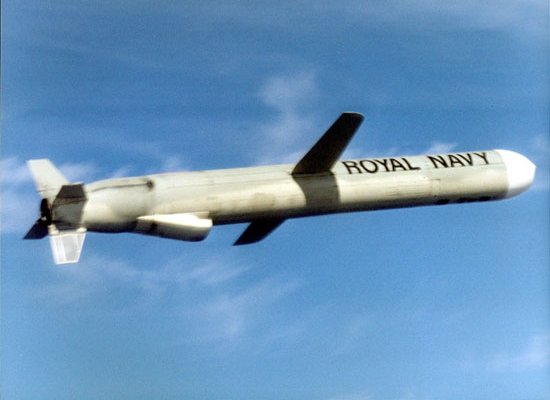
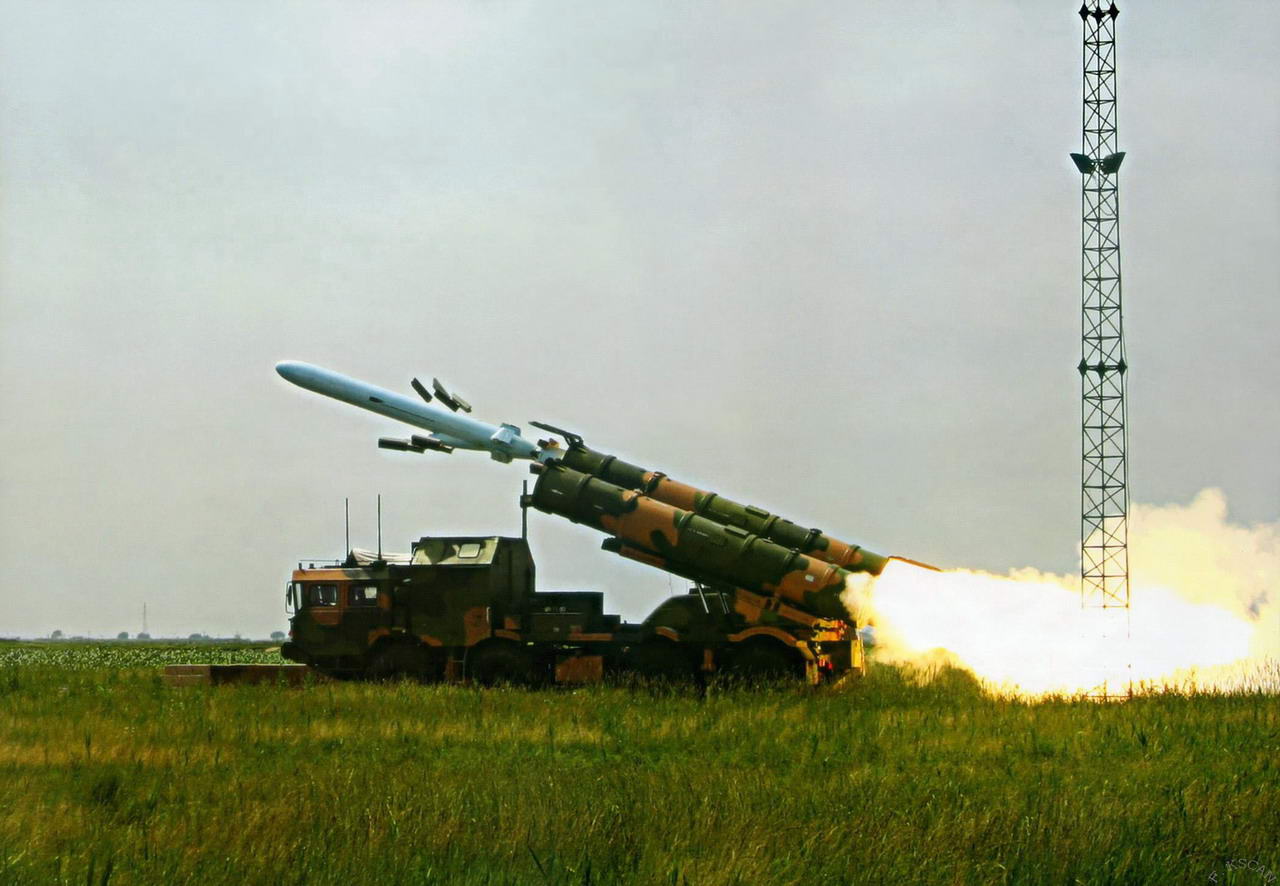
Anti-ship missiles are guided missiles that are designed for use against ships and large boats. Most anti-ship missiles are of the sea-skimming type, many use a combination of inertial guidance and radar homing. A good number of other anti-ship missiles use infrared homing to follow the heat that is emitted by a ship; it is also possible for anti-ship missiles to be guided by radio command all the way.
The first anti-ship missiles, which were developed and built by Nazi Germany, used radio command guidance, these saw some success in the Mediterranean Theater in 1943 - 44, sinking or heavily damaging at least 31 ships with the Henschel Hs 293 and more than seven with the Fritz X, such as the Italian battleship Roma or the cruiser USS Savannah. A variant of the HS 293 had a TV transmitter on board. The bomber carrying it could then fly outside the range of naval AA guns and use TV guidance to lead the missile to its target by radio control.
Many anti-ship missiles can be launched from a variety of weapons systems including surface warships (they can then be referred to as ship-to-ship missiles), submarines, bombers, fighter planes, patrol planes, helicopters, shore batteries, land vehicles, and conceivably, even by infantrymen firing shoulder-launched missiles.
A typical acronym for the phrase "anti-ship missile" is ASM, but AShM can also be used to avoid confusion with air-to-surface missiles, anti-submarine missiles, and anti-satellite missiles.


 Please leave your valuable comments on my posts. Thanks